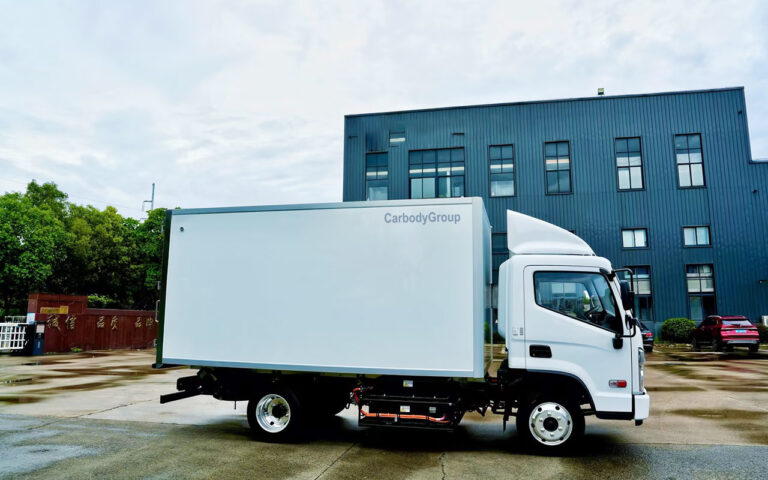
——In-depth analysis of structural design, core materials and multi-field applications
Sandwich panel is a kind of board structure compounded by multi-layer materials, and its core feature is to take the lightweight core layer as the core, and realize the functional composite through the high-strength surface panel and advanced bonding technology. This structural design gives it excellent heat insulation, load-bearing and lightweight performance, which is widely used in refrigerated trucks, construction projects, mobile carriers and other fields.
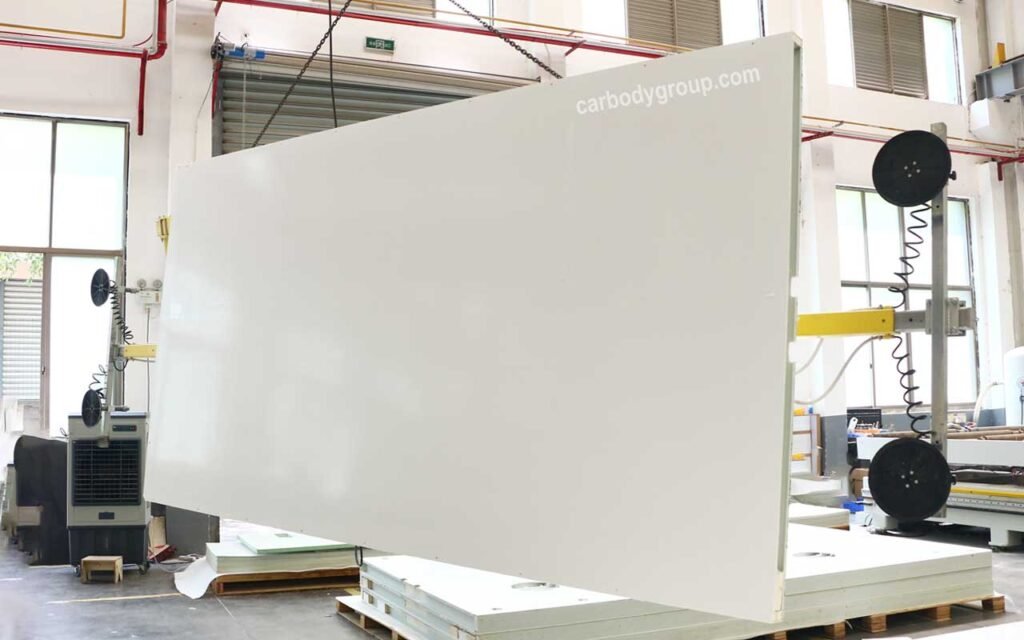
Sandwich Composite Structure
Sandwich panels utilize a layered composite structure, where each layer of material acts synergistically through a specific process:
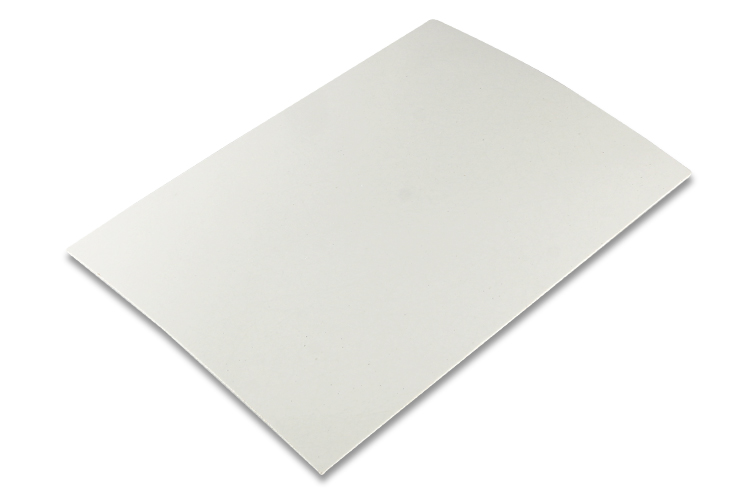
- Exterior skin – fiberglass reinforced plastic (FRP), aluminum alloy, or continuous fiber reinforced thermoplastic (CFRT) to provide a protective layer for aesthetics, strength, and weather resistance.
- Core material – polyurethane foam (PU), extruded polystyrene (XPS), PET, PVC, polypropylene honeycomb or plywood for lightweight insulation for thermal insulation, vibration damping and structural support.
- Adhesive layer – water-based environmentally friendly polyurethane adhesive VOC emissions reduced by 98%.
- Embedded reinforcing materials – embedded materials include wood, aluminum tubes, glass fiber reinforced plastic tubes and high strength plastic rods.
- Inner skin layer – high tensile strength continuous fiber composite material (e.g. 700 MPa force fiber) to enhance the overall rigidity.
What Types of Sandwich Panels Are Available?
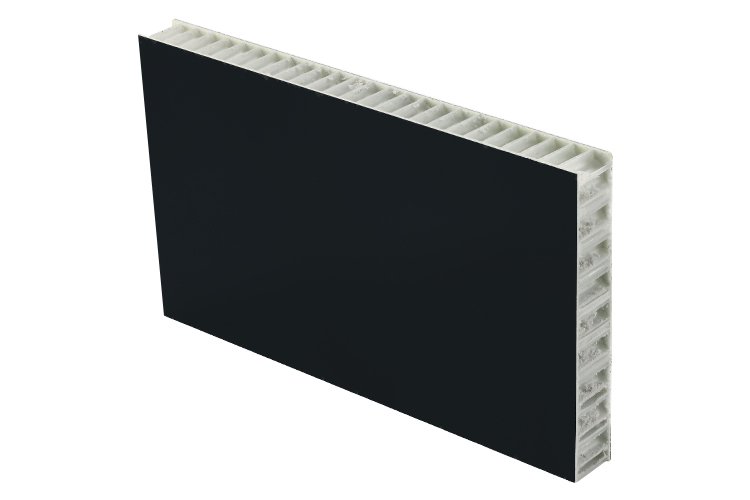
Honeycomb Sandwich Panel
- Thickness: 20mm
- Skin Material: GRP Sheet
- Skin Thickness: 1mm
- Core Material: Honeycomb Core
- Core Density: 80kg/m³
- Area Weight: 3.8kg/m²
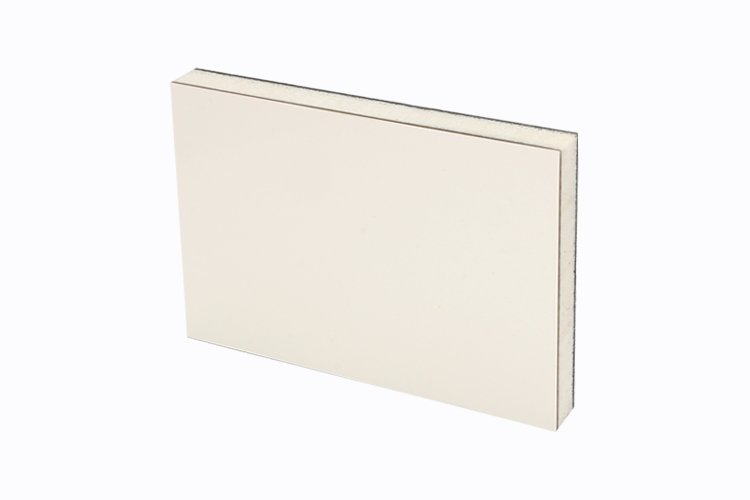
PET Foam Sandwich Panel
- Thickness: 22.0mm. (Customized)
- Upper Skin: 2.5mm grey gelcoat GRP sheet
- Core Material: 100kg/m³ PET foam.
- Lower Skin: 2.0mm white gelcoat GRP sheet
- Area Weight: 9.6kg/m²
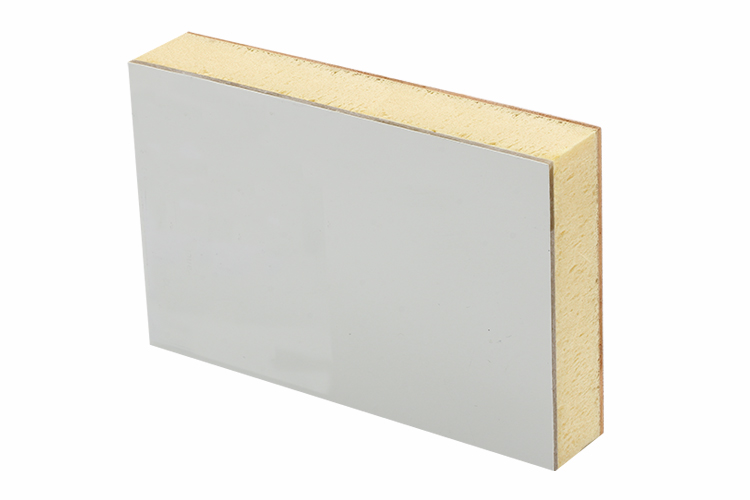
XPS Foam Sandwich Panel
- Thickness: 31mm
- Top Surface: 3mm Plywood + PVC Film
- Bottom Surface: 2.5mm FRP Sheet
- Core: 25.5mm XPS
- Foam Density: 35~40kg/m³
- Area Weight: 7.14kg/m²
FRP polymer foam sandwich panels
Manufacturing process: Adopting one-piece vacuum composite molding technology to realize seamless bonding of surface material-core material under 10-³Pa vacuum.
Typical data: The thermal insulation efficiency is increased by 47% compared with traditional materials, and the weight of FRP-PET foam sandwich panel with 15mm thickness is only 5kg/m².
Outer layer options
Functional characteristics: bear the main mechanical loads, corrosion and abrasion resistant
- FRP (Fiberglass Reinforced Plastic): impact resistant, corrosion proof and suitable for wet or rainy environments.
- CFRT (Continuous Fiber Reinforced Plastic): a cost-effective alternative to FRP, eco-friendly and recyclable, with excellent resilience and easy repair.
- Pre-painted galvanized steel: weather resistant, versatile and low maintenance.
- Aluminum skin (0.5-2mm thickness): lightweight, corrosion-resistant and thermally conductive, up to 60% lighter than steel.
- Stainless steel: heavy duty durable material for high temperature or corrosive environments.
- PP non-slip surface: non-slip flooring for wet or industrial environments.
Core options
Core value: Realization of thermal insulation, vibration damping and structural reinforcement
- PP Honeycomb Core: Polypropylene construction with shock absorbing and rigid properties.
- XPS foam: closed cell insulation for insulation applications such as refrigerated trucks.
- PU foam: Adjustable density with excellent acoustic and vibration damping properties.
- PET foam: environmentally friendly, recyclable and highly rigid.
- PVC foam: lightweight and easy to mold, suitable for customized designs.
| Core Material Type | Thermal Conductivity (W/m·K) | Compressive Strength | Representative Applications |
| PU Polyurethane Foam | 0.023 | 200-400 kPa | Refrigerated Truck Bodies |
| XPS Extruded Polystyrene | 0.027 | 400 kPa | Freight Box Trucks |
| PET Foam Material | 0.033 | Above 500 kPa | High-end RV Flooring |
| Polypropylene Honeycomb | — | Lateral Compressive Strength 1.5 MPa | Box Trucks, Camping Trailers |
Adhesive layer
Sandwich panel adhesive layers are used to bond panels and core materials to enhance the sealing, stability and peeling resistance of sandwich panels. Common adhesives include:
- Polyurethane adhesives
- Epoxy adhesives
- Acrylate adhesives
Honeycomb sandwich panels
Structural features: Hexagonal/circular honeycomb structure makes the panel with anisotropic mechanical characteristics, reducing weight by 30% while maintaining high compressive strength, mainly used in box trucks side panels, front panels, floors, door panels, roof panels, and other scenarios with high requirements for lightweighting.
Wood composite sandwich panels
FRP surface layer is composite with plywood core, combining the economy of organic materials and the recyclability of thermoplastic materials, using thermo compression molding process, adapting to the needs of complex curved surface design. Its fire resistance is certified by EN13501-1 fire protection class B1.
Metal composite sandwich panels
Process cost: 25% lower than traditional welded structure
Bending test: 3mm aluminum plate + PU core material combination load up to 150kg/m².
| Type | Core Material | Application Scenarios | Performance Advantages |
| Polymer Foam Sandwich Panel | PU, XPS, PET Foam Materials | Refrigerated Truck Bodies, Cold Storage Doors | Low thermal conductivity down to 0.023 W/(m·K), withstands temperatures as low as -40°C |
| Honeycomb Sandwich Panel | Polypropylene (PP) Honeycomb Structure | Box Truck Roofs, Engineering Vehicle Toolboxes | Weight reduced by 40%, impact resistance improved by 15%[^5] |
| Composite Sandwich Panel | Plywood + Continuous Fiber Reinforced Layer | Modular Building Walls, Ship Interiors | Combines the cost-effectiveness of wood with the weather resistance of composite materials |
| Metal Sandwich Panel | Aluminum-Plastic Composite Core Material | Container House Exterior Walls, Industrial Factory Roofs | Fire rating up to A2, service life exceeding 20 years |
Why Choose Sandwich Panels?
- Excellent thermal insulation: low thermal conductivity reduces energy costs in refrigerated trucks or thermostatic buildings.
- High strength-to-weight ratio: outperforms traditional materials while being 70% lighter than steel or concrete.
- Rapid installation: Modular design simplifies assembly and reduces project time by up to 50%.
- Cost Effectiveness: Mass production reduces waste and its long life reduces replacement costs.
- Fire performance: Certain core materials (such as mineral wool) meet stringent fire safety standards.
Cross-Industry Applications of Sandwich Panels
Transportation
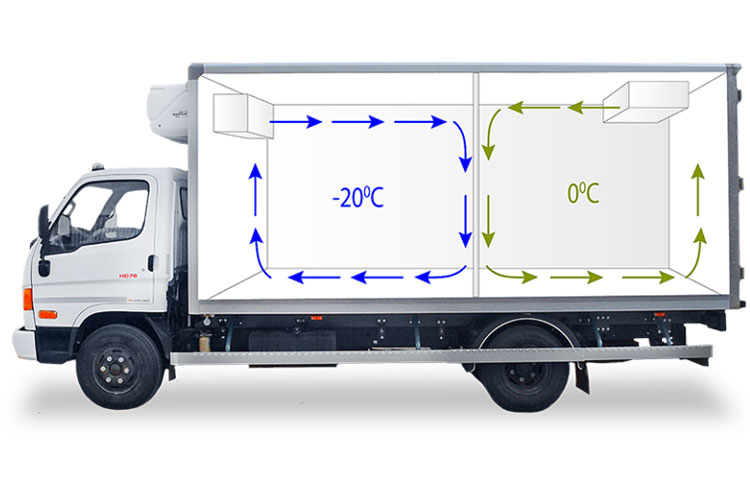
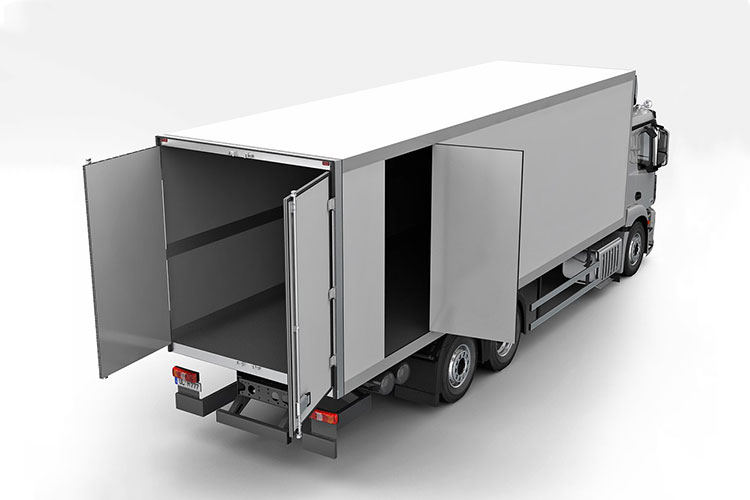
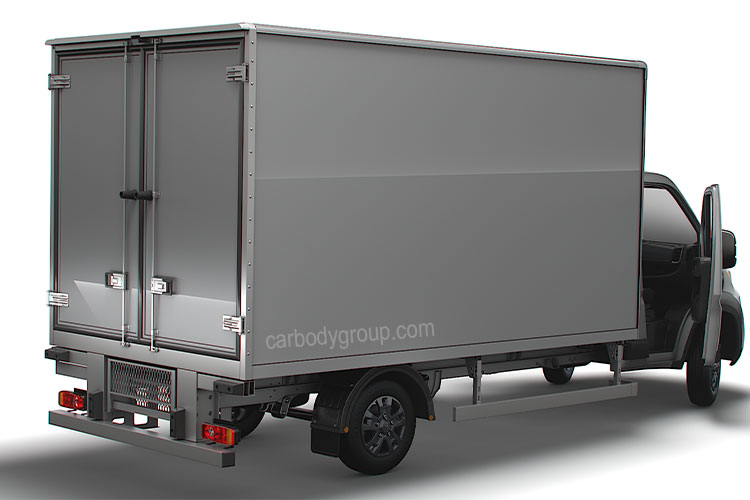
- Refrigerated truck and trailer box:
The sandwich panel with XPS/PU core material can keep the constant temperature of perishable goods.
The sandwich panel with PU/XPS foam core material has a temperature rise of only 1.2℃ in the compartment after 72 hours of simulation test in -40℃ environment.
The number of structural parts is reduced by 35% by using 700MPa continuous fiber reinforced skin of a brand model.
- Manufacture of new energy carriers:
Lightweight benefits: Pure electric box trucks use sandwich panel box to increase range by 23%.
- Tool box body:
Composite sandwich panels for categorized tool storage and shock protection
- RV and Camper Bodies.
Lightweight and durable for mobile living spaces.
- Dry van trucks
Fiberglass XPS foam sandwich panels, fiberglass honeycomb sandwich panels for significant weight reduction and impact resistance.
Building structures
- Modular Housing:
Prefabricated walls and roofs allow for the rapid construction of offices, hospitals and schools. Sandwich panels are used as wall and flooring materials for modular buildings, shortening the construction cycle by more than 50%.
Construction efficiency: A mobile square hospital built with sandwich panels can be erected in 12 hours with 200 m² units.
Energy saving data: 61% improvement in energy saving efficiency compared to brick-concrete buildings.
- Exterior walls and roofs
Water-resistant skin with insulating function for energy-saving design.
- Cold storage partitions
XPS core sandwich panels meet the strength and sealing requirements of long-term low-temperature environments.
Cold storage and special purpose
- Walk-in freezers:
Sandwich panels with a thickness of 30 mm or more prevent thermal bridging effects in industrial refrigeration.
- Cleanrooms and laboratories:
Smooth, non-porous surfaces meet hygiene and contamination control standards.
Marine Industry
The superstructure of a certain type of yacht uses PVC sandwich panels, reducing the structural weight by 28%.
Frequently Asked Questions (FAQ)
What are the sizes of sandwich panels?
Standard sizes include lengths up to 12 meters, widths up to 3.6 meters, and thicknesses ranging from 10 mm to 150 mm.
Are they eco-friendly?
The PET and PP cores are recyclable and the reduced energy consumption during use lowers the carbon footprint.
How long is the service life of sandwich panels?
The service life is usually between 10 and 30 years, depending on the material and maintenance. Sandwich panels with FRP skins can usually exceed 30 years with proper maintenance.
What is a fiberglass sandwich panel? How is its structure composed?
Glass Fiber Sandwich Panel is a multi-layer composite panel consisting of a high-strength outer skin panel (e.g. FRP, aluminum alloy), a lightweight core material (e.g. polyurethane foam, XPS, PET, PVC, EPS) and an adhesive layer. The core structure consists of an outer skin layer (to provide weather resistance), a core material layer (for heat insulation and vibration damping), and an adhesive layer (to enhance stability), combining lightweight and high load-bearing performance.
What are the main types of sandwich panels?
FRP polymer foam sandwich panels (vacuum composite molding, 47% increase in insulation efficiency);
Honeycomb sandwich panel (polypropylene honeycomb core, 30% weight reduction);
Timber composite sandwich panel (plywood core + FRP top layer, B1 fire certification);
Metal composite sandwich panels (aluminum/PU core combination, load up to 150kg/m²).
What are the core materials of sandwich panels? What are the advantages of each?
Commonly used core materials and characteristics:
PU foam: thermal conductivity 0.023 W/m-K, sound insulation and shock absorption;
XPS: pressure resistance 400kPa, suitable for refrigerated trucks;
PET foam: environmentally friendly and recyclable, high stiffness (compressive 500kPa+);
PP honeycomb: strong shock absorption, lateral pressure resistance 1.5MPa.
What are the advantages of sandwich panels over traditional materials?
Five core advantages:
Extremely lightweight and strong (70% lighter);
Thermal insulation and energy saving (61% reduction in building energy consumption);
Modular installation (50% reduction in construction period);
Cost-effective (less production waste);
Fire resistance (e.g. mineral wool core).
How well does sandwich panel insulate?
The core material has low thermal conductivity (e.g. 0.023 W/m-K for PU foam), which can significantly reduce energy loss in refrigerated truck applications, and the thermostatic effect is remarkable.