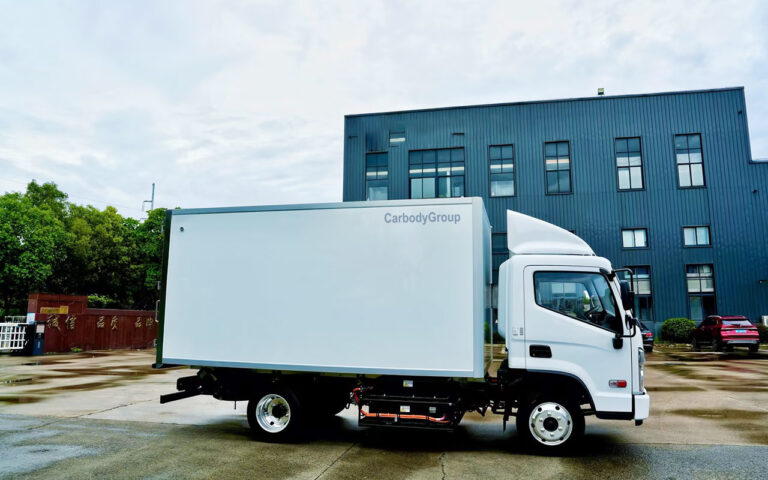
(Fridge Truck Maintenance / Cold Chain Compliance / Refrigeration Unit Service)
Why Does Fridge Truck Maintenance Directly Affect Business Profits?
- What the Data Reveals: American Cold Chain Association study shows that regularly maintained fridge trucks have 63% fewer breakdowns and 41% fewer cargo damage costs
- Compliance Risks: EU GDP (Cold Chain for Pharmaceuticals) and FDA Food Transportation regulations mandate equipment condition.
- Residual value management: Used fridge trucks with complete maintenance records command a premium of 15-25% (North American used vehicle market data)
Daily Checkup: 5-Minute Quick Process
Pre-start temperature calibration
- Verification of actual compartment temperature versus controller display using a NIST-certified thermometer (FDA requires ≤ ±1°F)
- Case Study: Litigation Lessons Learned from a Pharmaceutical Company’s 0.5°F Deviation Leading to Vaccine Obsolescence
Visual inspection of sealing systems
- Key test: door seal wear (using the $1 bill test method)
- Air leakage rate standard: ISO 1496-2 requires ≤5% volume/hour
Noise monitoring of refrigeration unit operation
Abnormal noise cross-reference table:
| Type of sound | Possible malfunction | Emergency Solution |
|---|---|---|
| Metal rubbing sound | Worn compressor bearings | Shut down immediately and contact an authorized service provider |
| High frequency beeping | Condenser fan obstructed | Clear heat sink of foreign objects |
Weekly In-Depth Maintenance: Specialized Technical Points
Refrigeration system core parameter optimization
- Refrigerant pressure monitoring: Carrier® units recommend 250-300 psi for high pressure / 20-30 psi for low pressure.
- Evaporator de-icing cycle setting (daily automatic de-icing recommended for pharmaceutical shipments, triggered by humidity for food shipments)
Compartment structural integrity check
- Polyurethane foam layer test: use infrared thermography to locate areas of cold bridges (temperature differences >4°F require repair)
- Floor drainage test: tilt at a 3° angle to verify drainage rate and prevent microbial growth (NSF/3-A sanitation standard)
Monthly Professional-Grade Maintenance: Extends Equipment Life
Power system in-depth maintenance
- Battery Load Test: -20°F cold start current value not less than 80% of nominal value
- Generator Carbon Brush Replacement Interval: Detroit Diesel® recommends replacement every 500 operating hours.
Aerodynamic optimization
- Deflector Angle Adjustment: 4% fuel savings per 0.1 reduction in wind resistance (SAE J1252 test standard)
- Recommended tool: Computational Fluid Dynamics (CFD) simulation software optimization program.
Seasonal Maintenance Strategies: Meeting the Challenges of Climate Extremes
(Winterize Frigde Trucks / Heatwave Preparedness)
| Seasons | Item | Industry Customized Solutions |
| Winter | Diesel Anti-Gel Treatment (with Arctic Express® additive); Hydraulic line heat tape installation | Pharmaceutical transportation: backup battery pack warm-up system |
| Summer | Condenser heat sink upgrade (aluminum V-bellows recommended); Solar reflective coating construction (3M™ products reduce compartment temperature by 15°F) | Meat transportation: additional CO₂ monitoring alarm device |
Digital Management Tools: Smart Solutions to Improve Maintenance Efficiency
Remote monitoring system integration
- Thermo King® TracKing real-time tracking: compressor running hours, temperature fluctuation curve, fault code warning
- Data application: predictive maintenance model (LSTM neural network predicts component life error <7%)
Blockchain maintenance record depository
- IBM Food Trust™ solution: tamper-proof maintenance logs to meet EU Regulation 2019/1381 audit requirements
Building a Sustainable Cold Chain Asset Management System
- Economic modeling: Adoption of TPM (Total Productive Maintenance) reduces lifecycle costs by 22% (refer to ISO 55000 standard)
- Food companies: focus on microbial control (ATP biofluorescence testing 1x per week)
- Pharmaceutical companies: mandatory 21 CFR Part 11 electronic records compliance retrofit
- Used box truck dealers: access to OEM original maintenance data packages improves valuation credibility
Industry Status and Maintenance Value
Data insight
- Failure rate: unstandardized maintenance leads to 32% increase in the failure rate of fridge trucks.
- Energy consumption: Scientific maintenance can reduce fuel consumption by 28%-35%.
- Life expectancy: regular maintenance of frigde truck service life is extended by 5-8 years on average.
Core values of maintenance
- Reduce operating costs: reduce the loss of sudden failure caused by the stoppage of transportation
- Ensure cargo safety: Stabilize refrigeration performance and ensure cargo quality.
- Enhance the value of assets: extend the service life of the equipment and increase the residual value rate.
Fridge Truck Maintenance System
In-depth maintenance of thermodynamic systems
⚠️ 80% of refrigeration failures originate from these three components:
Condenser three-dimensional cleaning method
- Quarterly deep cleaning: using 40 ° oblique angle high-pressure water gun (pressure ≤ 3MPa)
- Monthly self-inspection: use infrared thermometer to detect the temperature difference of heat sink >5℃ need to be dealt with
- Tools: Professional grade cold chain cleaning kit
Refrigerant intelligent monitoring program
Monthly testing by electronic leak detector (see table below for R404A system pressure criteria)
| Ambient temperature | Normal value for low voltage | Normal value for high voltage |
| 25℃ | 2.1-2.5 bar | 12-14 bar |
| 35℃ | 2.8-3.2 bar | 16-18 bar |
Evaporator microbial prevention and control
- Monthly disinfection with food-grade hydrogen peroxide fogging
- Focus areas: drain connections, fan blade grooves
Dynamic sealing management of the truck body
▶️ Experimental data: Door seal gaps >3mm lead to 40% increase in cold consumption
Three-dimensional detection method:
- Banknote test: use 100 yuan banknotes to clip on the seal strip at various places, the pulling resistance needs to be even
- Thermal imaging scanning: fridge truck special tester
- UV developer: dark environment after spraying to detect the leakage point
Fridge truck body maintenance
- Clean the interior of the wagon regularly to prevent odors.
- Check the insulation of the wagon and repair it promptly if it is found to be broken.
Tire and Chassis Maintenance
- Tire pressure check: monthly
- Chassis cleaning and lubrication: quarterly cleaning and lubrication of key components
Electrical system check
- Battery status: check the power level every month to avoid the refrigeration system failing to operate
- Wiring Connection: Regularly check the electrical wiring to ensure a strong connection.
Intelligent system maintenance
- Temperature curve monitoring: real-time monitoring of temperature fluctuations
- Failure warning: install vibration monitor, real-time warning of compressor abnormalities
▷ Maintenance Intervals
Regular maintenance programs are conducted according to the intensity of operation:
- Average monthly mileage <2000km: routine maintenance every 90 days
- 2000-5000km: every 60 days to check the compressor bracket.
- >5000km: need to install vibration monitor for real-time warning.
- Record maintenance log: Record the time and content of each maintenance.
Fault Warning and Emergency Response
| Abnormal phenomenon | Priority check point | Emergency program |
| Compartment temperature fluctuation>±2℃/h | Door seal sealing | Temporary use of cold chain sealing tape |
| Compressor rattling accompanied by oil stains | Bracket bolt torque | Immediate shutdown for maintenance |
By implementing this scientific maintenance system, you will gain:
✅ 45% lower average annual maintenance costs
✅ 60% increase in vehicle residual value
✅ Cargo wastage rate controlled at less than 0.03%
✅ Extend equipment life by 8-10 years